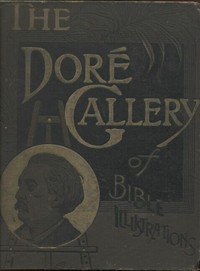
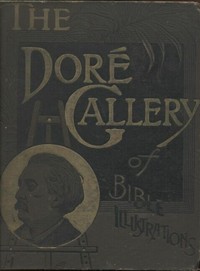
About 536 minutes
Auricular Confession and Popish Nunneries Volumes I. and II., Complete — A Closer Reading
Theology
123,157 recorded words. 1 minutes difference from this book's estimate.
View Gutenberg source #37695
This digital edition of The Story of the Hymns and Tunes — Themes and Context is described by source-level measurements including 123,380 words, 8 hr 57 min estimated reading time, and 25 detected text sections.
The text analysis averages about 18.8 words per sentence, while the detected sections provide another way to judge how the source is divided.
Project Gutenberg metadata also associates the work with “Hymns -- History and criticism,” connecting these edition facts with the source record’s subject description.
Explore this collection
These alternatives are selected using recorded categories and estimated reading time.
About 536 minutes
Theology
123,157 recorded words. 1 minutes difference from this book's estimate.
View Gutenberg source #37695About 540 minutes
Theology
124,006 recorded words. 3 minutes difference from this book's estimate.
View Gutenberg source #41850About 547 minutes
Theology
125,682 recorded words. 10 minutes difference from this book's estimate.
View Gutenberg source #42639Search stored excerpts and compare books → Choose by your preferences →
Choices use stored catalog measurements. Estimates vary with reading speed. A shared category is a catalog label, not a claim that two books have the same argument or literary quality.
Search reads excerpt text stored with this catalog and links to its associated Gutenberg record. The connection is stored in the site database; this tool does not recheck that every excerpt is word-for-word identical to that external record. Excerpt search does not cover every chapter and does not verify historical publication dates.
Catalog snapshot checked: 2026-09-26. Coverage: 100 public books, 100 available source excerpts.
Calculated from edition completeness, EPUB availability, text structure and catalogue metadata. Not a user rating.
Total of 100 points, scaled to a 2.5-5.0 range. Editions with an empty description or a missing EPUB file are not scored.
Public-domain source text
The source text is kept in the dedicated reader, separate from this catalogue record and its commentary.
The compilers of The Story of the Hymns and Tunes adopt a narrative voice that blends biographical anecdote with historical commentary, as seen in the account of Robert Robinson. The authors report that Robinson, after writing “Come, Thou Fount of Every Blessing,” later regretted his loss of faith, allegedly saying to a fellow passenger, “I am the unhappy man who wrote that hymn many years ago; and I would give a thousand worlds, if I could feel as I felt then.” This direct quotation, though unattributed to a source, serves to dramatize the hymn’s emotional weight and the author’s personal trajectory.
The compilers frequently rely on anecdotal accounts to enliven hymn histories. For instance, the story of Elder Jabez Swan interrupting his own sermon with “When for Eternal Worlds I Steer” is presented as a climactic moment: “to feel a climactic thrill at the sudden breaking out of the eccentric orator with this song in the very middle of his sermon.” The description emphasizes Swan’s unpolished yet poetic style, calling him “poetical as a Hebrew prophet.” However, the compilers do not provide a source for this anecdote, and the tune “Sonnet” is noted as anonymous. This reliance on oral tradition or hearsay suggests that the book’s authority rests more on narrative appeal than on verifiable documentation.
The language used to describe hymn performance often carries a revivalist fervor. In discussing Montgomery’s “A Poor Wayfaring Man of Grief,” the compilers write that “every tongue took it up, (and it was strange if every foot did not count the measure,) and the coldest kindled with gospel warmth as the story swept on.” The parenthetical aside about feet counting measure underscores the rhythmic, almost physical impact of the hymn. Such phrasing reveals the compilers’ interest in the congregational experience—how a hymn’s meter and narrative could unify a group. The choice of verbs like “kindled” and “swept” aligns with the evangelical context of many hymns discussed.
The compilers craft vivid, often moralizing portraits of hymn writers. Robert Robinson is described as having “a certain unsteadiness of mind” that caused him to revise his beliefs “too often for his spiritual health or enjoyment.” This characterization frames his doctrinal shifts as a personal failing rather than intellectual exploration. Similarly, Elder Swan is depicted as “unlearned in the technics of the schools, but always eloquent and armed with ready wit.” Such descriptions prioritize character and spiritual authenticity over formal education, reflecting a broader cultural valuation of heartfelt piety over academic training.
The compilers organize hymns thematically, with chapters such as “Hymns of Suffering and Trust” and “Old Revival Hymns.” Within each chapter, they often juxtapose multiple hymns and their backstories, creating a mosaic effect. For example, the section on “A Poor Wayfaring Man of Grief” immediately follows the account of Robinson, linking hymns by theme (hospitality and divine encounter) rather than chronology. The compilers also occasionally include musical details, such as the tune “Duane St.” with “a step that made every heart beat time,” indicating attention to how music reinforces textual meaning. However, these musical references are sporadic, and the book remains primarily a literary and historical survey.
Readers approaching The Story of the Hymns and Tunes should recognize it as a work shaped by its compilers’ editorial voice—one that prizes narrative drama and moral instruction over strict historical accuracy. The excerpts reveal a text that often blurs the line between documented fact and embellished anecdote. For a fuller understanding of hymn origins, cross-referencing with scholarly sources is advisable. Yet the book’s strength lies in its evocation of how hymns lived in the hearts and voices of congregations, a quality that remains valuable for those interested in the cultural life of religious song.
I have often lingered over those old hymn stories, noticing how their gentle faith mirrors the quiet solemnity of The Doré Bible Gallery, Volume 2 — Reading Notes. Both whisper of awe rather than shout it. In my years shelving, I found they share a patient reverence—one through melody, the other through engraved light—each asking only for a still moment’s companionship.
Answer a few questions and save a private reflection on this device.