About 41 minutes
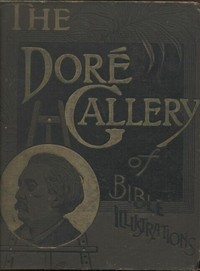
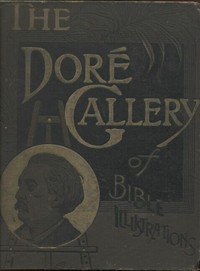
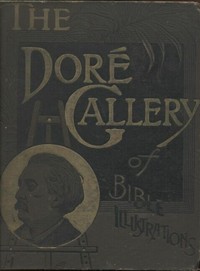
The Doré Bible Gallery, Volume 4 — Text and Context
Theology
9,302 recorded words. 3 minutes difference from this book's estimate.
View Gutenberg source #8704
The source record for The Doré Bible Gallery, Volume 2 — Reading Notes measures this digital text at 10,089 words, 44 min estimated reading time, and 2 detected text sections.
The text analysis averages about 25.4 words per sentence, while the detected sections provide another way to judge how the source is divided.
Project Gutenberg metadata also associates the work with “Bible -- Illustrations,” connecting these edition facts with the source record’s subject description.
Explore this collection
These alternatives are selected using recorded categories and estimated reading time.
About 41 minutes
Theology
9,302 recorded words. 3 minutes difference from this book's estimate.
View Gutenberg source #8704About 41 minutes
Theology
9,276 recorded words. 3 minutes difference from this book's estimate.
View Gutenberg source #58014About 40 minutes
Theology
9,008 recorded words. 4 minutes difference from this book's estimate.
View Gutenberg source #8705Search stored excerpts and compare books → Choose by your preferences →
Choices use stored catalog measurements. Estimates vary with reading speed. A shared category is a catalog label, not a claim that two books have the same argument or literary quality.
Search reads excerpt text stored with this catalog and links to its associated Gutenberg record. The connection is stored in the site database; this tool does not recheck that every excerpt is word-for-word identical to that external record. Excerpt search does not cover every chapter and does not verify historical publication dates.
Catalog snapshot checked: 2026-09-26. Coverage: 100 public books, 100 available source excerpts.
Calculated from edition completeness, EPUB availability, text structure and catalogue metadata. Not a user rating.
Total of 100 points, scaled to a 2.5-5.0 range. Editions with an empty description or a missing EPUB file are not scored.
Public-domain source text
The source text is kept in the dedicated reader, separate from this catalogue record and its commentary.
Gustave Doré's Bible illustrations are not merely decorative accompaniments; they impose a distinct narrative rhythm on the scriptural text. In Volume 2, the editor's prefatory remarks and the selection of plates reveal a deliberate strategy to guide the reader's attention toward key dramatic moments. The Joseph cycle, for instance, is condensed into three plates—Joseph sold into slavery, interpreting Pharaoh's dream, and making himself known to his brethren—each preceded by a page of letter-press that offers a brief analysis. This structure creates a staccato pace, leaping from crisis to resolution while omitting connective tissue. The editor's voice, praising Doré's 'magic touch' and 'rich and facile invention,' sets an admiring tone that primes the reader to view the images as the primary text, with scripture serving as explanatory captions.
The volume opens with a biographical sketch that positions Doré as 'the most original and variously gifted designer the world has ever known.' This hyperbolic claim establishes a lens of veneration. The editor emphasizes Doré's youth and precocity, noting that he 'won a brilliant reputation' before most artists have left their novitiate. Such language frames the illustrations as the work of a prodigy, inviting the reader to approach them with awe rather than critical scrutiny. The editor also asserts that Doré 'has raised illustrative art to a dignity and importance before unknown,' a statement that implicitly elevates these engravings above mere accompaniment. This framing shapes the reader's expectation: the images are not subordinate to the Bible but are presented as autonomous works of genius. The editor's repeated use of superlatives—'greatest,' 'ever-increasing wonder,' 'multifarious gifts'—creates a rhetorical crescendo that may influence how the viewer interprets the visual details.
The three Joseph plates exemplify the volume's approach to pacing. The first plate, depicting Joseph sold to the Ishmaelites, captures a moment of betrayal and transition. The accompanying text from Genesis 37 is truncated, ending with Joseph's arrival in Egypt. The second plate, Joseph interpreting Pharaoh's dream, focuses on a scene of intellectual triumph, with Joseph explaining the seven years of plenty and famine. The third plate, Joseph making himself known, presents an emotional climax. Between these plates, the reader must infer intervening events—Potiphar's house, the prison, the butler's dream—from the biblical text alone. This selection creates a rhythm of high drama, skipping over slower narrative passages. The editor's choice to include only these three moments suggests a preference for scenes of confrontation and revelation over domestic or transitional episodes. The result is a compressed, almost cinematic narrative arc that prioritizes visual impact over narrative completeness.
Each plate is prefaced by a page of letter-press that 'contain[s] generally a brief analysis of the design.' The editor's voice in these analyses is expository and reverent, avoiding critical commentary. For example, the description of Joseph interpreting Pharaoh's dream simply recounts the biblical story without evaluating Doré's composition. This restraint contrasts with the effusive biographical sketch, creating a tonal shift. The letter-press serves a practical function: it orients the reader to the scene depicted, ensuring that the image is understood in its scriptural context. However, the editor occasionally inserts interpretive cues, such as noting that Joseph's dream 'is one' and that the doubling signifies God's certainty. These glosses subtly guide the reader's interpretation, reinforcing a providential reading of the narrative. The overall effect is that the letter-press acts as a bridge between text and image, but one that prioritizes clarity over analysis.
Readers approaching Volume 2 should attend to the interplay between the editor's framing and Doré's visual choices. The volume's selective pacing and reverent tone invite a particular mode of engagement—one that emphasizes dramatic peaks and artistic genius. To appreciate the work fully, consider how the omitted passages and the letter-press shape your understanding of the biblical story. This edition is best experienced as a collaboration between artist and editor, where each plate is a focal point in a curated journey through scripture.
There’s something about watching Joseph’s story unfold through those engravings—the way light falls differently on each moment—that makes me feel quieter inside, like I’m being let into a slow truth rather than lectured. That same hush came back reading Preaching and Paganism, where doubt feels almost tender, not threatening. It lingers softly, the way certain old pictures do. Preaching and Paganism — Reading Companion reminds me of that feeling.
Create a short personal record of your experience with this book.