About 32 minutes
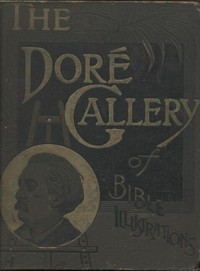
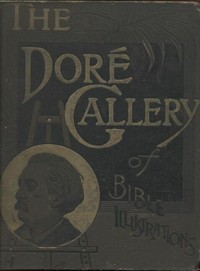
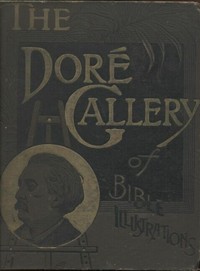
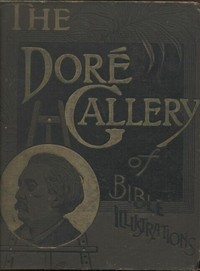
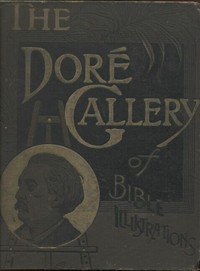
The Doré Bible Gallery, Volume 1 — Context and Discussion
Theology
7,221 recorded words. 0 minutes difference from this book's estimate.
View Gutenberg source #8701
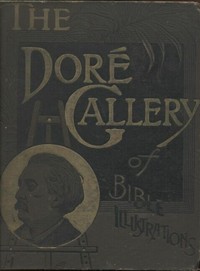
Before opening The Doré Bible Gallery, Volume 7 — A Closer Reading, the edition data offers a quick orientation: 7,351 words, 32 min estimated reading time, and 1 detected text section.
The text analysis averages about 24.3 words per sentence, while the detected sections provide another way to judge how the source is divided.
Project Gutenberg metadata also associates the work with “Bible -- Illustrations,” connecting these edition facts with the source record’s subject description.
Explore this collection
These alternatives are selected using recorded categories and estimated reading time.
About 32 minutes
Theology
7,221 recorded words. 0 minutes difference from this book's estimate.
View Gutenberg source #8701About 30 minutes
Theology
6,682 recorded words. 2 minutes difference from this book's estimate.
View Gutenberg source #19568About 34 minutes
Theology
7,819 recorded words. 2 minutes difference from this book's estimate.
View Gutenberg source #69889Search stored excerpts and compare books → Choose by your preferences →
Choices use stored catalog measurements. Estimates vary with reading speed. A shared category is a catalog label, not a claim that two books have the same argument or literary quality.
Search reads excerpt text stored with this catalog and links to its associated Gutenberg record. The connection is stored in the site database; this tool does not recheck that every excerpt is word-for-word identical to that external record. Excerpt search does not cover every chapter and does not verify historical publication dates.
Catalog snapshot checked: 2026-09-26. Coverage: 100 public books, 100 available source excerpts.
Calculated from edition completeness, EPUB availability, text structure and catalogue metadata. Not a user rating.
Total of 100 points, scaled to a 2.5-5.0 range. Editions with an empty description or a missing EPUB file are not scored.
Public-domain source text
The source text is kept in the dedicated reader, separate from this catalogue record and its commentary.
Gustave Doré’s illustrations in this volume pair each engraving with a page of letter-press that offers a brief analysis of the design. The editor’s preface describes the collection as a response to demand for a more affordable edition of Doré’s Bible illustrations, selected with “special reference to the known taste of the American people.” The excerpts include three parables—the Rich Man and Lazarus, the Pharisee and the Publican, and Jesus and the Woman of Samaria—each rendered in the King James Version text, allowing the reader to compare the biblical wording with Doré’s visual interpretation.
The editorial preface employs a formal, almost reverential tone, describing Doré as “the greatest of modern delineators” and praising his “magic touch.” This language frames the illustrations as works of genius, not mere decoration. The phrase “art-loving Biblical students” reveals the intended audience: readers who value both aesthetic refinement and scriptural knowledge. The editor’s choice to include a biographical sketch of Doré—highlighting his early fame and “multifarious gifts”—further elevates the artist’s status. The diction consistently emphasizes wonder and delight, as in “ever-increasing wonder and delight at his fine fancy.” Such phrasing shapes the reader’s expectation that the engravings are to be admired, not just studied.
In the excerpt from Luke 16, the dialogue between the rich man and Abraham is stark and economical. The rich man’s plea—“send Lazarus, that he may dip the tip of his finger in water and cool my tongue”—uses concrete, physical detail to convey torment. Abraham’s reply, “Son, remember that thou in thy lifetime receivedst thy good things,” shifts the focus to moral memory. The exchange reveals character through speech: the rich man remains demanding even in hell, while Abraham’s tone is firm but not cruel. Similarly, in the Pharisee and the Publican parable, the Pharisee’s self-congratulatory prayer (“God, I thank thee, that I am not as other men are”) contrasts sharply with the publican’s brevity (“God be merciful to me a sinner”). Doré’s engravings likely capture these contrasts in posture and expression.
Each engraving is preceded by a page of narrative letter-press that “generally contain[s] a brief analysis of the design.” This structure creates a deliberate sequence: the reader first encounters a textual interpretation, then views the image. The preface notes that the work was “under the pains-taking and careful scrutiny of artists and scholars,” suggesting that the letter-press was reviewed for accuracy. The excerpts show that the biblical text itself is reproduced verbatim, not paraphrased, so the letter-press likely focuses on visual elements—composition, light, gesture—rather than retelling the story. This separation of text and image invites the reader to move between word and picture, each illuminating the other.
Across the three parables, certain details recur. The setting of a well appears in the Samaritan woman story (“Jacob’s well was there”), a location that emphasizes physical thirst as a metaphor for spiritual need. The rich man’s request for a drop of water echoes this motif. Another recurring element is the contrast between social positions: rich and poor, Pharisee and publican, Jew and Samaritan. Doré’s illustrations likely heighten these contrasts through spatial arrangement—the publican “standing afar off,” the rich man in torment separated by a “great gulf.” The editor’s selection of these particular parables suggests a focus on moral reversal and the inversion of earthly status, a theme well suited to Doré’s dramatic style.
Although the excerpts do not describe the engravings in detail, the preface characterizes Doré’s style as capable of rendering “the horrible to the grotesque, the grand to the comic.” The parables chosen offer opportunities for each: the rich man’s torment could be horrible, the Pharisee’s self-righteousness grotesque, the Samaritan woman’s encounter grand. The editor’s claim that Doré “has raised illustrative art to a dignity and importance before unknown” positions these engravings as serious artworks, not mere decorations. The reader is encouraged to examine how Doré uses light and shadow, facial expression, and composition to translate biblical narrative into visual form. The letter-press likely points out specific details—a gesture, a glance, a landscape element—that reward close looking.
This volume invites a dual reading: first the biblical text, then the engraving, then back to the letter-press for analysis. Readers may find it rewarding to compare Doré’s visual choices with the wording of the King James Version, noting where the artist emphasizes or downplays elements. The editor’s biographical sketch, while laudatory, provides context for Doré’s reputation and approach. Approaching the work as a dialogue between word and image—rather than as a simple illustrated Bible—opens up questions about how visual art interprets and amplifies scripture.
In Doré’s parables, the gulf between the rich man and Lazarus is drawn in light and shadow—a silence between souls. That same quiet, covenant-bound sobriety lingers in The Nature of a Gospel Church A Confession of Evangelical Principles; and the Members' Covenant. Intended for the Use of the Church of Christ. — Story, Setting & Ideas, where community is measured not by clamor, but by the still solemnity of mutual promise. I often shelve them near each other, their shared hush keeping company.
A brief reflection can help important ideas stay with you longer.