About 569 minutes
The Expositor's Bible: The Epistle to the Ephesians — Key Ideas to Explore
Theology
130,777 recorded words. 7 minutes difference from this book's estimate.
View Gutenberg source #39196
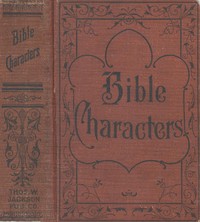
The catalog record for Bible Characters — A Reader’s Guide provides practical reading context through 132,429 words, 9 hr 36 min estimated reading time, and 13 detected text sections.
The text analysis averages about 18.1 words per sentence, while the detected sections provide another way to judge how the source is divided.
Project Gutenberg metadata also associates the work with “Bible -- Biography,” connecting these edition facts with the source record’s subject description.
Explore this collection
These alternatives are selected using recorded categories and estimated reading time.
About 569 minutes
Theology
130,777 recorded words. 7 minutes difference from this book's estimate.
View Gutenberg source #39196About 568 minutes
Theology
130,496 recorded words. 8 minutes difference from this book's estimate.
View Gutenberg source #39856About 584 minutes
Theology
134,314 recorded words. 8 minutes difference from this book's estimate.
View Gutenberg source #42645Search stored excerpts and compare books → Choose by your preferences →
Choices use stored catalog measurements. Estimates vary with reading speed. A shared category is a catalog label, not a claim that two books have the same argument or literary quality.
Search reads excerpt text stored with this catalog and links to its associated Gutenberg record. The connection is stored in the site database; this tool does not recheck that every excerpt is word-for-word identical to that external record. Excerpt search does not cover every chapter and does not verify historical publication dates.
Catalog snapshot checked: 2026-09-26. Coverage: 100 public books, 100 available source excerpts.
Calculated from edition completeness, EPUB availability, text structure and catalogue metadata. Not a user rating.
Total of 100 points, scaled to a 2.5-5.0 range. Editions with an empty description or a missing EPUB file are not scored.
Public-domain source text
The source text is kept in the dedicated reader, separate from this catalogue record and its commentary.
This volume assembles character studies from three prominent nineteenth-century preachers—Dwight L. Moody, T. De Witt Talmage, and Joseph Parker—each offering a distinct homiletic voice. The excerpts show Talmage’s flair for graphic, sensory detail: in his account of John the Baptist’s death, he describes “the ghastly, bleeding head” and “the death glare” still in the eyes, while the banqueters “shout with laughter.” The editor, C. B. Gillette, frames the collection as a way to gain “personal acquaintance” with biblical figures, though the actual content is less biographical analysis than dramatic sermonizing.
Talmage’s style relies on heightened, almost cinematic imagery to drive home moral points. In the John the Baptist passage, he contrasts the innocent birthday festival—“No harm in kindling the lights”—with the grisly aftermath: Salome carries the head “with as much indifference as a waiting maid might take a tray of empty glassware.” The effect is to shock the reader into revulsion, then pivot to a lesson about the corruption of worldly celebrations. Similarly, his account of Saul’s battle against the Amalekites builds a crescendo of violence—“swords cut and hack; javelins ring on shields”—only to undercut the victory with Saul’s disobedience over spoils. The moral is explicit: the Israelites “are conquered by sheep and oxen.” This pattern of vivid horror followed by doctrinal commentary recurs throughout the excerpts.
Gillette’s introduction promises a collection that helps readers “draw as near as possible to these great and good characters.” Yet the excerpts do not provide intimate character portraits; instead, they offer dramatic retellings of key episodes, often with heavy editorializing. For instance, the John the Baptist narrative focuses on Salome’s dance and the beheading, not on John’s own teachings or personality. The Saul passage is less about Saul’s inner conflict than about the external spectacle of battle and the lesson of obedience. The catalog subject “Bible—Biography” is thus somewhat misleading: the work is better described as a sermon anthology that uses biblical figures as springboards for moral exhortation.
Although the excerpts are attributed to three authors, the sample primarily showcases Talmage’s oratorical style. Moody and Parker are mentioned in the introduction but do not appear in the provided text. The introduction itself notes Moody’s power came not from “superior scholarship” or eloquence but from “the power of God,” suggesting a contrast in approach. Parker is described as drawing from an “immense intellectual store-house.” Without excerpts from all three, the reader cannot assess how their voices differ. The title page lists them as “Famous Authors,” but the actual range of homiletic methods remains partially obscured by the selection.
Readers approaching this volume should expect not systematic biography but fervent, scene-driven sermons that prioritize moral impact over historical or psychological depth. The excerpts suggest a work best sampled for its period rhetoric and its window into late-nineteenth-century American preaching. Those seeking a balanced, scholarly treatment of biblical figures will need to supplement this collection with other sources.
I keep thinking about those old sermons—Moody’s fiery Saul, Talmage’s doomed Baptist—and how they make judgment feel so immediate. Yet, in quieter hours, I find myself returning to the songs those same men surely hummed between chapters, their tunes carrying the weight that plain prose cannot. That is what The Story of the Hymns and Tunes — Themes and Context evokes for me: the half-remembered hymn behind the preacher’s pause.
A brief reflection can help important ideas stay with you longer.