The Book of Mormon — Context and Discussion

(0 User reviews)   1673
Smith, Joseph, Jr., 1805-1844, Church of Jesus Christ of Latter-day Saints Project Gutenberg 2008 Not confirmed
Church of Jesus Christ of Latter-day Saints -- Sacred books; Latter Day Saint churches -- Sacred books Readers of public-domain and historical texts
Project Gutenberg digital edition en

Edition facts

Words 272,688
Reading time 1186 min
Text sections 31

The catalog record for The Book of Mormon — Context and Discussion provides practical reading context through 272,688 words, 19 hr 46 min estimated reading time, and 31 detected text sections.

The text analysis averages about 35.2 words per sentence, while the detected sections provide another way to judge how the source is divided.

Project Gutenberg metadata also associates the work with “Church of Jesus Christ of Latter-day Saints -- Sacred books,” connecting these edition facts with the source record’s subject description.

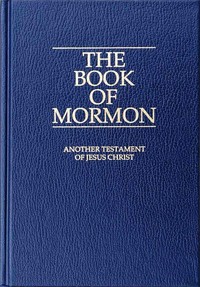
This editorial note examines how the opening title page, testimonies, and a later excerpt from Alma 27 guide a first reading of The Book of Mormon, focusing on its layered authorship, narrative structure, and recurring themes of covenant and community.
Share
Editorial Edition Score 4.9/5

Calculated from edition completeness, EPUB availability, text structure and catalogue metadata. Not a user rating.

How this score is calculated
  • Description quality20 pts
  • Title & short description10 pts
  • Source metadata20 pts
  • Text length15 pts
  • Chapters / structure15 pts
  • EPUB file integrity20 pts

Total of 100 points, scaled to a 2.5-5.0 range. Editions with an empty description or a missing EPUB file are not scored.

Edition quality

Read the Text

o me by his Holy Spirit. And it came to pass that he believed in my words.

2:18 But, behold, Laman and Lemuel would not hearken unto my words; and being grieved because of the hardness of their hearts I cried unto the Lord for them.

2:19 And it came to pass that the Lord spake unto me, saying: Blessed art thou, Nephi, because of thy faith, for thou hast sought me diligently, with lowliness of heart.

2:20 And inasmuch as ye shall keep my commandments, ye shall prosper, and shall be led to a land of promise; yea, even a land which I have prepared for you; yea, a land which is choice above all other lands.

2:21 And inasmuch as thy brethren shall rebel against thee, they shall be cut off from the presence of the Lord.

2:22 And inasmuch as thou shalt keep my commandments, thou shalt be made a ruler and a teacher over thy brethren.

2:23 For behold, in that day that they shall rebel against me, I will curse them even with a sore curse, and they shall have no power over thy seed except they shall rebel against me also.

2:24 And if it so be that they rebel against me, they shall be a scourge unto thy seed, to stir them up in the ways of remembrance.

3:1 And it came to pass that I, Nephi, returned from speaking with the Lord, to the tent of my father.

3:2 And it came to pass that he spake unto me, saying: Behold I have dreamed a dream, in the which the Lord hath commanded me that thou and thy brethren shall return to Jerusalem.

3:3 For behold, Laban hath the record of the Jews and also a genealogy of my forefathers, and they are engraven upon plates of brass.

3:4 Wherefore, the Lord hath commanded me that thou and thy brothers should go unto the house of Laban, and seek the records, and bring them down hither into the wilderness.

3:5 And now, behold thy brothers murmur, saying it is a hard thing which I have required of them; but behold I have not required it of them, but it is a commandment of the Lord.

3:6 Therefore go, my son, and thou shalt be favored of the Lord, because thou hast not murmured.

3:7 And it came to pass that I, Nephi, said unto my father: I will go and do the things which the Lord hath commanded, for I know that the Lord giveth no commandments unto the children of men, save he shall prepare a way for them that they may accomplish the thing which he commandeth them.

3:8 And it came to pass that when my father had heard these words he was exceedingly glad, for he knew that I had been blessed of the Lord.

3:9 And I, Nephi, and my brethren took our journey in the wilderness, with our tents, to go up to the land of Jerusalem.

3:10 And it came to pass that when we had gone up to the land of Jerusalem, I and my brethren did consult one with another.

3:11 And we cast lots—who of us should go in unto the house of Laban. And it came to pass that the lot fell upon Laman; and Laman went in unto the house of Laban, and he talked with him as he sat in his house.

3:12 And he desired of Laban the records which were engraven upon the plates of brass, which contained the genealogy of my father.

3:13 And behold, it came to pass that Laban was angry, and thrust him out from his presence; and he would not that he should have the records. Wherefore, he said unto him: Behold thou art a robber, and I will slay thee.

3:14 But Laman fled out of his presence, and told the things which Laban had done, unto us. And we began to be exceedingly sorrowful, and my brethren were about to return unto my father in the wilderness.

3:15 But behold I said unto them that: As the Lord liveth, and as we live, we will not go down unto our father in the wilderness until we have accomplished the thing which the Lord hath commanded us.

3:16 Wherefore, let us be faithful in keeping the commandments of the Lord; therefore let us go down to the land of our father’s inheritance, for behold he left gold and silver, and all manner of riches. And all this he hath done because of the commandments of the Lord.

3:17 For he knew that Jerusalem must be destroyed, because of the wickedness of the people.

The Book of Mormon opens not with narrative but with a title page that frames the entire work as an abridgment—a record written by Mormon, taken from the plates of Nephi, and later sealed by his son Moroni. This layered authorship immediately signals a text that is self-conscious about its origins and transmission. The subsequent Testimony of Three Witnesses, including Oliver Cowdery and David Whitmer, asserts divine authentication: the witnesses claim to have seen the plates and heard God's voice. For a first reader, these prefatory materials establish a frame of prophetic authority and communal testimony before any story begins.

The Title Page as a Programmatic Statement

The title page does more than name the book; it declares its purpose and audience. It is addressed to Lamanites, Jews, and Gentiles, and it announces that the record is meant to convince readers that Jesus is the Christ. The phrase “if there are faults they are the mistakes of men” introduces a note of humility, acknowledging human imperfection in the transmission of divine truth. This opening sets expectations for a text that is both historical and theological, and it invites readers to weigh the claims of divine origin against human fallibility.

The Testimonies: A Framework of Witness

Immediately following the title page, the Testimony of Three Witnesses presents a first-person account of seeing the plates and hearing God's voice. The witnesses—Oliver Cowdery, David Whitmer, and Martin Harris—speak in unison, using “we” throughout. Their testimony emphasizes that the plates were shown “by the power of God, and not of man,” and that an angel laid them before their eyes. This section functions as a legal-like affidavit, grounding the book's claims in sensory experience. For a first reader, these testimonies create a threshold: one must decide how to receive this claim of supernatural encounter.

Narrative Structure: Abridgment and Embedded Voices

The title page describes the book as “an abridgment of the record of the people of Nephi,” indicating that the narrative is not a direct chronicle but a compiled and edited version. This structure means that readers encounter events through multiple layers: the original record, Mormon's abridgment, and Joseph Smith's translation. The later excerpt from Alma 27 illustrates this complexity. It recounts a negotiation between Ammon and a Lamanite king, where the king fears the Nephites will enslave them. The dialogue is direct and repetitive, with phrases like “it came to pass” marking narrative progression. The joy of Ammon and Alma upon meeting is described in physical terms—Ammon is “swallowed up in the joy of his God, even to the exhausting of his strength.” Such moments of intense emotion are characteristic of the text's style.

Recurring Motifs: Covenant, Community, and Land

In the Alma 27 excerpt, the people of Anti-Nephi-Lehi are granted the land of Jershon as an inheritance, and the Nephites pledge to protect them because of their “fear to take up arms against their brethren.” This episode highlights a central concern of the book: the formation and preservation of covenant communities. The land is not merely territory but a gift tied to obedience and divine favor. The phrase “voice of the people” appears, indicating a decision-making process that involves communal consent. For a first reader, these patterns—covenant, land, protection, and collective decision—recur throughout the narrative and provide a lens for understanding the book's theological and social vision.

A first reading of The Book of Mormon benefits from attending to its framing devices: the title page, the testimonies, and the repeated narrative formulas. The text invites readers to consider how divine and human authorship intertwine, and how stories of migration, conflict, and reconciliation are shaped by the conviction that God acts in history. The excerpts provided offer only a glimpse; the full work spans centuries of narrated time, with many voices and perspectives.

I remember sitting beside my grandmother, her worn copy open, while she spoke of belonging and covenant as if they were threads we held together. That same quiet hush returned years later when another shelf offered Comparative Religion — Key Ideas to Explore, reminding me that every community stitches its meaning from the same patient need.

There are no reviews for this eBook.

0
0 out of 5 (0 User reviews )

Add a Review

Your Rating *
There are no comments for this eBook.

Reader reflection

How did this book work for you?

Your answers remain private and are stored only in this browser.

Your progress 0 / 10
1

What is your current status with this title?

2

How much did you enjoy the reading experience?

3

Is this a title you would suggest to others?

4

What was the reading difficulty like?

Related eBooks