
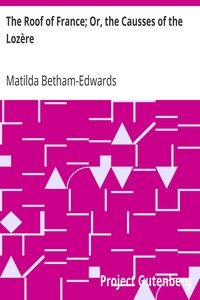
The Roof of France; Or, the Causses of the Lozère by Matilda Betham-Edwards
Published in 1890, 'The Roof of France' is Matilda Betham-Edwards's account of her journey through the Causses, a high limestone plateau in the Lozère department. This isn't a plot-driven story with a villain and a hero. Instead, the narrative follows her as she travels by carriage and on foot, moving from town to remote hamlet. She acts as our eyes and ears, describing the stark, dramatic landscapes—deep gorges, vast caves, and plains where the wind has few trees to stop it.
The Story
The book is the journey itself. Betham-Edwards starts from the more familiar parts of southern France and steadily climbs into the isolation of the Causses. She meets shepherds, innkeepers, and farmers, sharing their simple meals and listening to their stories. She explores the famous caverns like the Aven Armand, describing them with a sense of awe that still feels fresh. There are challenges: rough roads, basic lodging, and the sheer physical effort of the travel. The 'story' is her attempt to understand this region, to capture its spirit before the modern world changed it forever. It's about the quiet moments of discovery, like finding a forgotten Roman road or watching a sunset over the endless karst.
Why You Should Read It
I loved this book for its personality. Betham-Edwards isn't a detached observer; she's a participant. Her writing is frank, sometimes funny about her discomforts, and always deeply respectful of the people she meets. She doesn't romanticize their hard lives, but she finds dignity and interest in them. Reading it feels like uncovering a hidden layer of history. It's a snapshot of rural French life at the cusp of the 20th century, written by a woman traveling alone—which was pretty bold for the time. The landscapes she describes are characters in their own right, feeling both ancient and alive. It made me want to put down my phone and go see if those silent, stony plains are still there.
Final Verdict
Perfect for readers who love immersive travel writing, hidden history, and strong, clear voices from the past. If you enjoy authors like Patrick Leigh Fermor or Jan Morris, you'll find a kindred spirit in Betham-Edwards. It's also a great pick for anyone who dreams of slow travel and getting off the beaten path, even if it's just from their armchair. You might find the pace leisurely if you're after constant action, but if you let it, this book will transport you completely.
No rights are reserved for this publication. Enjoy reading and sharing without restrictions.
William Jones
9 months agoI found the data interpretation to be highly professional and unbiased.
Sarah Jackson
2 years agoThe clarity of the introduction set high expectations, and the argument presented in the middle section is particularly compelling. An excellent example of how quality digital books should be formatted.
Linda Gonzalez
1 year agoGreat value and very well written.
Ashley Harris
9 months agoGreat value and very well written.





Barbara Davis
1 month agoThe clarity of the introduction set high expectations, and the bibliography and references suggest a high level of research and authority. This adds significant depth to my understanding of the field.